
Medicine often celebrates its loudest moments.
The emergency operation that changes the course of a life. The child who walks out of the intensive care unit. The cancer declared to be in remission. These moments deserve every celebration they receive because they represent hope wrestled back from uncertainty.
But I have often wondered about what comes after the applause. What happens after the happy ending in a Bollywood rom-com.
What happens when the hospital room becomes a classroom? When surviving becomes living? When the question is no longer “Will this child make it?” but “What kind of life will this child have?”
Modern medicine has become remarkably good at helping children survive illnesses that, not long ago, would have been unimaginable to overcome. Every advances in paediatric oncology, neonatology, surgery, and intensive care creates something precious “The time”
And time brings new responsibilities.
A child who survives cancer deserves the chance to grow normally. A premature baby deserves healthy bones and metabolism. A child living with diabetes deserves adulthood free from preventable complications. A teenager with a hormonal disorder deserves the confidence that comes with normal growth and timely puberty.
This is where paediatric endocrinology quietly finds its purpose.Not by replacing the work of other specialties, but by building upon it.
Perhaps pediatric endocrinology is one of the few fields that measures success not in hours or days, but in decades. A few millimetres of growth each year. An HbA1c that improves by a fraction. A carefully adjusted insulin dose. Tiny decisions that rarely feel dramatic in the moment, yet quietly shape the trajectory of an entire lifetime.
There is something deeply reassuring about caring for children this way.
You meet them when they are small enough to hold a parent’s hand. You watch them grow taller, become independent, prepare for college, and eventually transition into adult life. Somewhere along that journey, the clinic visits become less about disease and more about life itself.
Some victories are impossible to photograph.
They are found in the young adult whose kidneys remain healthy after years of living with diabetes. The childhood cancer survivor who reaches their expected height. The parent who never has to wonder whether their child will be able to live a full and healthy life because someone quietly safeguarded their future, one clinic visit at a time.
These stories rarely make headlines. Yet they are the reason paediatric endocrinology continues to inspire me.
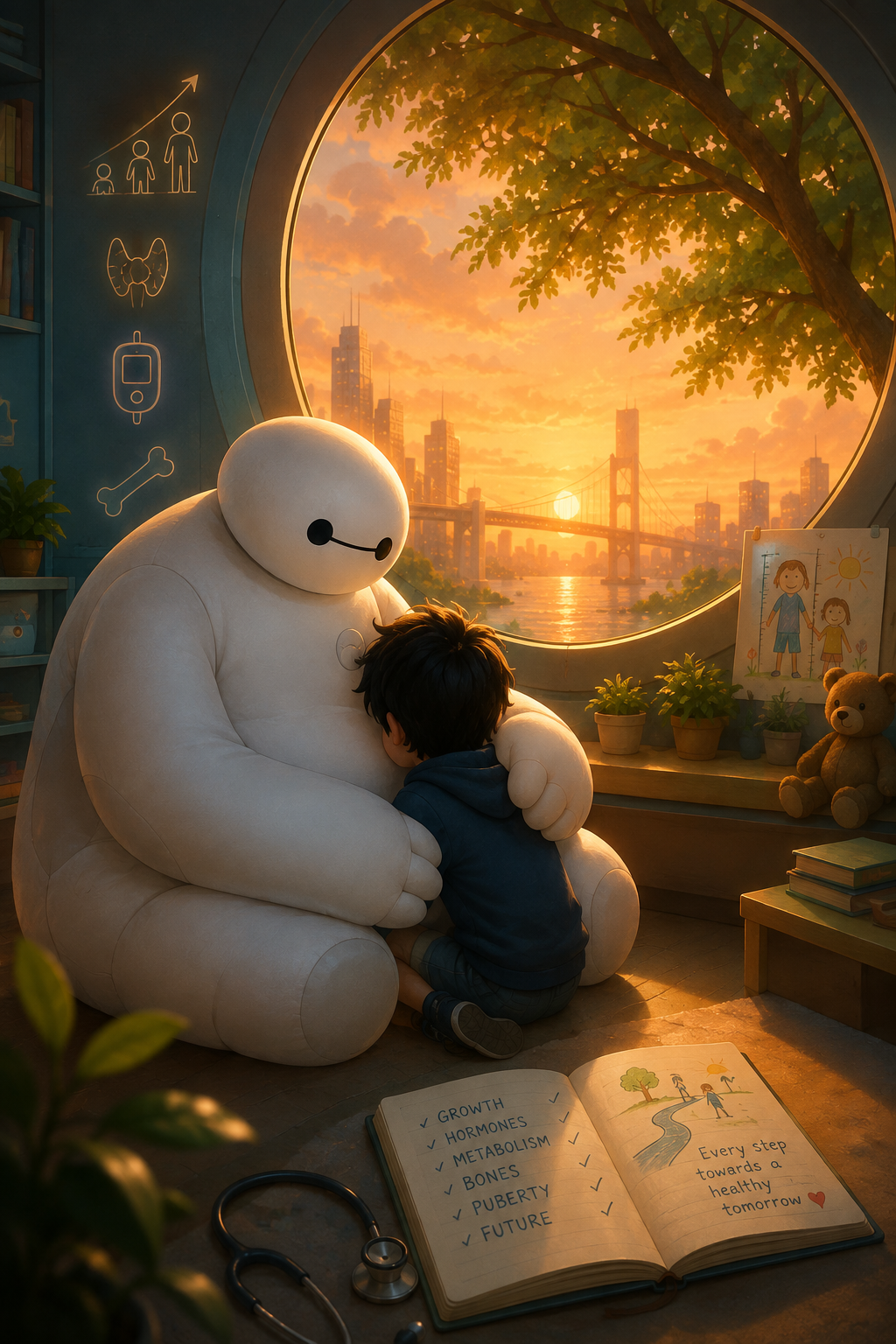
I’ve always been reminded of Baymax from Big Hero 6. He isn’t designed to be the strongest superhero or the one who seeks the spotlight. His purpose is simple: to heal, to protect, and to stay with the patient until they are truly well. Paediatric endocrinology often feels the same. We may not always enter the story at its most dramatic chapter, but we have the privilege of walking beside children through the years that follow helping them grow, thrive, and discover that surviving is only the beginning of living.
Perhaps those quieter chapters are every bit as meaningful.


